Bounty of the Salish Sea
Text
But how do you harvest the rushing salmon? the average Sockeye is too slippery to be caught with traditional nets, too strong to be hooked by traditional bone hooks and natural fishing line.
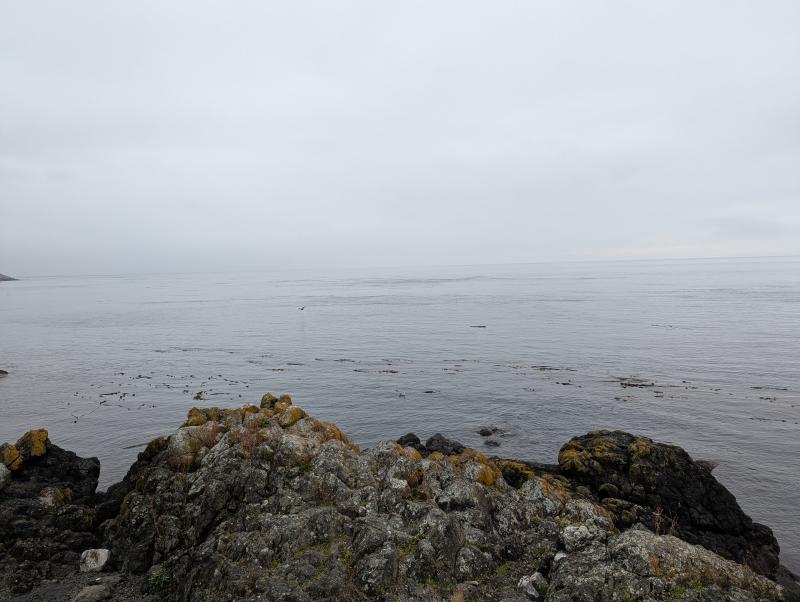
The idea behind reef net fishing is relatively simple. Use a net between canoes to catch fish with the flow of the strait. In practice, reef fishing is a complex system of craftsmanship and moving parts. A large net is strung between two canoes, traditionally woven from willow bark and forming an approximately 40 ft square. Trailing behind this net is a series of lines acting to both hold down the net and to assist in funneling the salmon into it. large rocks sourced along the beaches and cliff edges of the islands act as anchors for the system, and after retrieving these boulders, they are shaped and secured by hand, before being strategically angled at the bottom of the sound, oriented towards the flow of fish.
The anchor stones would be cut loose at the end of the season, and while some attempts were made to reuse them, generally the common practice was to leave them at the ocean floor, where after generations, formed the skeleton of an artificial reef, teeming with sea life over centuries of fishing expeditions. These reefs rapidly became home to their own ecosystem of coastal flora and fauna, greatly enhancing the surrounding environment for both the wildlife, and the generation of native fishers that would follow.
We can make a rough estimation on the switch from traditional methods to reef net fishing based on the bones found along the gathering places of native tribes. Around 1800-2000 years ago, many of the sites shifted away from having a mix of various fish and trended towards sockeye salmon, the primary catch for reef nets. This practice was refined over centuries, creating bigger and stronger nets, exploring new netting sites and honing the craft.
The practice of reef net fishing almost went extinct during the early 20th century due to a combination of over-fishing and poor stewardship by the rapidly industrializing canneries, and a slew of laws targeting the practice and aiming to override the treaties made with the American government in the century preceding it. As the salmon runs grew smaller and smaller, it became harder and harder to harvest a meaningful amount of fish.
Early conservation efforts, in a misguided attempt to save the rapidly dwindling salmon population, banned reef net fishing in both the united states and Canada by the mid 30s. Despite the laws attempts at carving out protections for native fishers, many of the native operations took a heavy blow.
By the 1970s, the conflict over fishing rights in the San Juans reached a head. Pollution was high, trawling had depleted the sound of many vital species, and native tribes were undertaking more and more drastic actions in response.
The Boldt decision was passed in 1974 to address the concerns of a wide array of tribes in and around the islands, including Muckleshoot, Stillaguamish, Yakima and Upper Skagit tribes, and their fishing rights surrounding the region. Native fishermen were entitled to approximately 50% of the catch of salmon, and were appointed in various ecological roles to assist in the preservation of the salmon.